Introduction
Poor scheduling and dispatch decisions continue to drain millions from fleet operations annually. Traffic congestion alone added $108.8 billion in costs to the trucking industry in 2022, resulting in 6.4 billion gallons of wasted diesel fuel. Beyond fuel waste, inefficient mid- and last-mile handovers account for between 13% and 19% of total logistics costs. Missed time windows, over-assigned drivers, and manual route planning compound these losses daily.
AI-driven scheduling and dispatch optimization software is addressing these problems in 2026, but adoption remains uneven. Only 10% of logistics providers have embedded AI into core operations, even as 40% have moved beyond pilots. This guide compares the best platforms on real-world capability: route intelligence, constraint handling, integration depth, and pricing transparency.
TL;DR
- Scheduling and dispatch optimization software automates job and vehicle assignments to maximize efficiency and minimize costs
- Leading 2026 platforms handle AI-powered routing, real-time dispatch, and complex multi-constraint scenarios in a single system
- Key buying criteria: pricing model (per-vehicle vs. per-API-call), constraint depth, integration flexibility, and deployment options
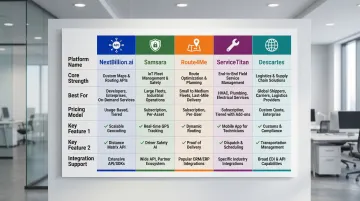
- Top picks include NextBillion.ai, Samsara, Route4Me, ServiceTitan, and Descartes, covering different fleet sizes and use cases
- The right choice depends on operational complexity, integration stack, and whether you need standalone optimization or an all-in-one platform
What Is Scheduling and Dispatch Optimization Software?
Scheduling and dispatch optimization software automates two distinct but interconnected functions. Scheduling is the planning layer—determining which jobs or deliveries to assign to specific time windows and resources. Dispatching is the execution layer—actively routing those assignments to drivers or field agents with real-time adjustments as conditions change.
To illustrate: a logistics coordinator schedules 150 deliveries across 12 drivers for Tuesday. The dispatch system then determines optimal stop sequences, pushes routes to driver mobile apps, and dynamically adjusts when traffic delays occur or a customer cancels mid-route.
How Optimization Engines Work
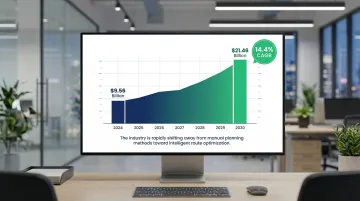
Modern platforms use constraint-based algorithms that account for vehicle capacity, driver hours, time windows, traffic patterns, and customer priority. These engines move beyond simple GPS routing to dynamic, multi-variable planning. The global route optimization software market was valued at $9.56 billion in 2024 and is projected to reach $21.46 billion by 2030, growing at 14.4% annually—which reflects how quickly manual planning methods are becoming operationally unviable at scale.
Advanced systems balance thousands of variables simultaneously to minimize total mileage while maximizing on-time performance. Key inputs include:
- Delivery time windows and customer priority levels
- Vehicle specs, capacity, and fuel consumption profiles
- Driver availability, hours-of-service limits, and skill sets
- Real-time traffic and service level commitments
Best Scheduling and Dispatch Optimization Software in 2026
These platforms were evaluated on route intelligence, real-time dispatch capability, constraint handling, pricing transparency, and integration flexibility.
NextBillion.ai
NextBillion.ai is an AI-driven routing and dispatch optimization platform built for enterprises and logistics technology providers. Founded in 2020 and now part of Velocitor Solutions, the company has optimized 10.9M+ deliveries and delivered $11M+ in cost savings across 150+ global businesses.
Its API-first architecture supports 50+ hard and soft constraints—time windows, vehicle specs, driver breaks, priority stops—with sub-second routing response times and predictable per-vehicle or per-order pricing instead of per-API-call billing.
The platform connects directly with fleet management systems including Samsara, Geotab, and Motive, making it especially valuable for logistics software builders and enterprise fleets that have outgrown rigid, expensive providers.
| Key Features | AI-powered multi-constraint route optimization, real-time dispatch updates, large distance matrix computation, truck-compliant routing, on-premise and cloud-agnostic deployment |
|---|---|
| Best For | Last-mile delivery, NEMT, field service, food and on-demand delivery, fleet management software companies, telematics providers |
| Pricing Model | Per-vehicle or per-order fixed-fee pricing; no per-API-call charges |
Samsara
Samsara is a fleet operations platform that combines telematics, AI dash cams, ELD compliance, and route dispatch in one system. Widely adopted by safety-conscious fleets across North America, the company serves over 20,000 core customers and 2,506 large customers representing $100,000+ in annual recurring revenue.
Its core strength lies in real-time GPS tracking tied directly to driver dispatch workflows, AI-powered safety scoring and incident detection, and a unified dashboard connecting dispatch decisions to driver behavior data. Full route optimization typically requires pairing with a dedicated optimization layer.
| Key Features | Real-time GPS and ELD, AI dash cams with collision detection, driver safety scoring, dispatch workflow management, fleet analytics |
|---|---|
| Best For | Mid-to-large fleets prioritizing safety compliance and telematics-driven dispatch alongside route management |
| Pricing Model | Annual subscription per vehicle; pricing varies by feature tier |
Route4Me
Route4Me is a cloud-based multi-stop route planning and dispatch platform serving over 40,000 users across last-mile delivery, food and beverage, retail, and field service verticals.
The platform stands out for its intuitive drag-and-drop route builder, automated route optimization, real-time driver tracking, and dispatcher-to-driver mobile communication—built for teams that need fast deployment without deep technical integration.
| Key Features | Multi-stop route optimization, real-time driver tracking, dispatch-to-mobile delivery, proof of delivery capture, customer notifications |
|---|---|
| Best For | Small to mid-size delivery operations, field service companies, retail distribution teams needing fast route-dispatch workflows |
| Pricing Model | Tiered subscription plans; pricing scales by number of users and route volume |
ServiceTitan
ServiceTitan is an enterprise field service management platform that integrates scheduling, dispatch, invoicing, and CRM in one system—purpose-built for trades and home services including HVAC, plumbing, electrical, and pest control. The platform is trusted by over 100,000 professionals.
Where it excels: intelligent job scheduling based on technician skill, location, and availability; automated dispatch with customer communication; and a mobile app keeping field technicians connected to the back office. That combination makes it a leading choice for field service operations that go beyond simple route delivery.
| Key Features | Smart scheduling and dispatch, technician skill matching, mobile field app, customer booking portal, invoicing and payments integration |
|---|---|
| Best For | Field service businesses in trades, HVAC, plumbing, pest control, and home services verticals |
| Pricing Model | Custom enterprise pricing; contact for quote |
Descartes Route Planning
Descartes is an enterprise-grade route planning and dispatch platform used by large distribution, logistics, and fleet operations globally. The platform scales from 10-vehicle fleets to operations exceeding 10,000 vehicles.
Unlike tools focused purely on daily dispatch, Descartes adds strategic territory and master route optimization alongside deep ERP and WMS integration—making it a strong fit for enterprise shippers and 3PLs managing thousands of stops across large networks.
| Key Features | Strategic and tactical route optimization, territory planning, real-time dispatch execution, driver and vehicle management, ERP/WMS integration |
|---|---|
| Best For | Large distribution networks, enterprise shippers, 3PLs, and carriers managing high-volume, multi-territory routing |
| Pricing Model | Enterprise licensing; pricing based on fleet size and module configuration |
Key Features to Look for in Scheduling and Dispatch Optimization Software
Constraint Handling Depth
The software should support not just basic time windows but layered hard and soft constraints—vehicle load capacity, driver hours of service, skill-based job assignment, priority stops, and geofence rules. Without that depth, planners resort to manual overrides that erode the time and cost savings the optimizer was purchased to deliver.
Critical constraints to verify:
- Time window enforcement (hard vs. soft)
- Vehicle capacity (weight, volume, axle limits)
- Driver HOS compliance and break requirements
- Skill or certification matching for specialized jobs
- Priority routing for premium customers
- Geofence restrictions for access-controlled areas
Integration and API Flexibility
In 2026, no dispatch platform operates in isolation. Evaluate whether the software offers open APIs, pre-built connectors to fleet telematics (Geotab, Samsara, Motive), and ERP/WMS hooks. Data quality and integration complexity are the most common challenges in digital logistics projects, often delaying ROI.
Pricing Model Transparency
Per-API-call pricing models can balloon costs as volume grows. Providers like Google Maps Platform and Mapbox charge per 1,000 billable events—a structure that becomes unpredictable at scale.
Two alternatives worth evaluating:
- Per-vehicle pricing — fixed monthly cost tied to fleet size, regardless of API call volume
- Per-order pricing — cost scales with fulfilled orders, making it easier to forecast against revenue
Both models offer more predictable unit economics for fleet operators and logistics tech builders planning for growth.
How We Chose the Best Scheduling and Dispatch Optimization Software
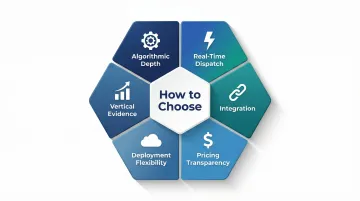
Each platform on this list was evaluated across six criteria:
- Algorithmic depth: Number and type of constraints supported by the routing engine
- Real-time dispatch: Ability to re-optimize on the fly as conditions change
- Integration: Ease of connecting to existing fleet, ERP, and telematics systems
- Pricing transparency: Clarity of pricing model and cost predictability at scale
- Deployment flexibility: Cloud, on-premise, or hybrid availability
- Vertical evidence: Documented customer outcomes in relevant industries
Common Buyer Mistakes to Avoid
UI over engine depth: A clean dashboard is easy to demo well. The harder question is whether the routing engine handles your actual constraint complexity — time windows, vehicle capacities, driver skills, multi-stop sequencing. Evaluate on that, not the interface.
Underestimating per-call pricing: A platform priced at $200/month for 50 routes can climb to $5,000/month at 500 routes under per-API-call models. Run your projected volume through the pricing structure before signing anything.
Skipping integration validation: Assuming compatibility with your fleet or ERP systems is a common mistake. Integration failures don't just delay ROI — they often require expensive custom workarounds that weren't budgeted for.
Matching Solution to Operational Profile
The best choice depends on operational profile. A last-mile delivery operator scaling API volume has different needs than a field service company scheduling 50 technicians daily. Start with vertical fit and constraint complexity — then narrow by price.
Conclusion
The right scheduling and dispatch optimization software in 2026 is the platform that accurately models your operational constraints, integrates cleanly with your existing stack, scales with volume, and doesn't introduce unpredictable cost spikes as you grow.
Before signing contracts, run each shortlisted platform through a real routing scenario with your actual constraints. Specifically:
- Pilot test 2-3 platforms against live data, not vendor-prepared examples
- Evaluate ongoing support quality, not just what vendors promise during onboarding
- Ask for customer references in your vertical
- Request demos using your own data and routes
For logistics businesses and tech platforms needing enterprise-grade routing and dispatch optimization without per-call pricing surprises, NextBillion.ai offers a free trial and direct access to solution engineers to accelerate deployment—book a demo to compare results against your current setup.
Frequently Asked Questions
What is the difference between routing and dispatch?
Routing determines the optimal sequence and path for stops or jobs, while dispatching is the real-time execution layer—assigning those routes to drivers, communicating updates, and adjusting for live conditions like traffic or cancellations.
What is the best route optimization software?
The best route optimization software depends on fleet size and use case. NextBillion.ai leads for API-first, multi-constraint optimization; Route4Me suits smaller operations; and Descartes is preferred for large enterprise networks. Match the tool to your constraint complexity and volume.
Which software is used for dispatch?
Common dispatch platforms include Samsara, ServiceTitan, Route4Me, and NextBillion.ai. Some focus on telematics-driven dispatch while others prioritize algorithmic optimization. The right choice depends on whether your bottleneck is visibility, scheduling intelligence, or route efficiency.
What software do truck dispatchers use?
Truck dispatchers commonly use Samsara for telematics-driven dispatch, Descartes for enterprise routing, and NextBillion.ai for API-based optimization. Many operations use a combination of a TMS for load management and a dedicated routing engine for optimization.
What is load and route optimization?
Load optimization determines how to best fill vehicle capacity across orders or stops, while route optimization sequences those stops for minimum distance, time, or cost. Platforms like NextBillion.ai solve both simultaneously using constraint-based algorithms.
How do delivery companies plan routes?
Delivery companies typically ingest orders (manually or via API), apply a routing engine with constraints (time windows, vehicle capacity, driver availability) to generate optimized multi-stop routes. Dispatchers then review and push routes to driver mobile apps, with real-time adjustments made throughout the delivery day.