Introduction
Modern e-commerce customers treat delivery transparency as a baseline expectation, not a bonus. 88% of consumers consider real-time delivery tracking critical for a positive experience, and 96% actively use tracking when it's available.
When a shipment update goes missing or arrives late, the fallout is fast: support tickets spike, refund requests multiply, and customer loyalty erodes at scale. "Where is my order?" (WISMO) inquiries account for 20%–40% of total e-commerce support volume during normal periods — climbing past 50% at peak.
Most e-commerce teams reach for shipping platforms first. But platform-level tracking is often too rigid for businesses that need to embed tracking data directly into their apps, dashboards, or customer portals.
Shipment tracking APIs solve that gap: engineering teams can query, subscribe to, or stream status updates programmatically — from carrier networks or GPS/telematics systems — and surface that data exactly where customers need it.
This guide evaluates the best real-time shipment tracking APIs for e-commerce in 2026, covering carrier coverage, update latency, webhook support, and pricing models, so your team can make an informed decision before committing to an integration.
TL;DR
- Real-time shipment tracking APIs let e-commerce teams embed carrier events or GPS updates directly into their apps and workflows
- Two distinct API types exist: carrier-event tracking (polling/webhooks) vs. GPS/location-based tracking for live last-mile visibility
- Top options in 2026 include EasyPost, AfterShip Tracking API, Shippo, NextBillion.ai, and Parcel Perform
- Key selection factors: carrier coverage depth, webhook reliability, response latency, and pricing model (per-call vs. per-shipment vs. fixed)
- For custom last-mile tracking, prioritize location intelligence APIs over carrier-event-only solutions
What Is a Real-Time Shipment Tracking API (and Why E-Commerce Needs One)
A shipment tracking API is a programmatic interface that allows e-commerce applications to query, subscribe to, or stream shipment status updates — either from carrier networks (scan events, status codes) or from GPS/telematics systems (live vehicle location). This is distinct from tracking software platforms, which provide pre-built UI and workflows rather than raw API access.
E-commerce businesses typically need two distinct tracking layers:
- Carrier-event APIs normalize status codes from USPS, FedEx, UPS, DHL, and hundreds of regional carriers into a unified schema, eliminating the need to build individual carrier connectors
- GPS/location APIs deliver real-time coordinates for last-mile delivery fleets, providing continuous visibility into courier position
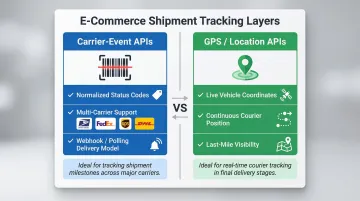
Most e-commerce tracking APIs only cover the carrier-event layer — which leaves significant blind spots in the final mile. A USPS OIG audit found 1.9 million improper stop-the-clock scans at delivery units instead of actual delivery locations, and 8.3 million scans with no GPS location data at all.
The five APIs below were selected based on real-time data quality, developer experience, integration depth, and commercial viability — covering both tracking layers where possible.
Best Real-Time Shipment Tracking APIs for E-Commerce in 2026
These five APIs were evaluated on merit — not brand recognition. Selection criteria included:
- Carrier coverage breadth and global reach
- Real-time data latency and webhook reliability
- Documentation quality and developer experience
- Pricing transparency and e-commerce use case fit
EasyPost
EasyPost is a developer-first shipping and tracking API that abstracts 100+ carrier integrations behind a single REST API, making it a strong default choice for e-commerce engineering teams that want carrier-normalized tracking events without building individual carrier connectors. It supports both label creation and tracking in one platform.
Its unified carrier data model returns all tracking events — across USPS, FedEx, UPS, DHL, and regional carriers — in a consistent schema with standardized status codes, removing the normalization burden from the development team. It also supports real-time webhook notifications for status changes, with up to six retry attempts for failed deliveries.
| Attribute | Details |
|---|---|
| Key Features | Multi-carrier tracking via single API, webhook event delivery, unified tracking status schema, address verification |
| Carrier/Integration Coverage | 100+ carriers globally; strong US carrier support (USPS, FedEx, UPS, DHL) |
| Pricing Model | $0.01–$0.03 per shipment (verify current rates on EasyPost's pricing page) |
AfterShip Tracking API
AfterShip is a post-purchase experience platform with a purpose-built tracking API covering 1,300+ carriers worldwide — making it one of the broadest carrier networks available via API. It is widely used by Shopify, Magento, and BigCommerce merchants who want to surface tracking data inside their own storefronts or customer portals.
AfterShip's differentiator is its AI-powered estimated delivery date (EDD) engine and anomaly detection, which can proactively flag delayed shipments before customers inquire. Its webhook system triggers on granular tracking events and supports custom statuses, which reduces WISMO ticket volume for e-commerce support teams.
| Attribute | Details |
|---|---|
| Key Features | 1,300+ carrier integrations, AI delivery date estimates, delay detection, branded tracking pages, webhooks |
| Carrier/Integration Coverage | Global; strongest in US, EU, and Asia-Pacific; deep Shopify and BigCommerce integration |
| Pricing Model | Free tier available; paid plans scale by shipment volume (Essentials: $11/month for 100 shipments) |
Shippo
Shippo is an API-first shipping platform that combines label generation with real-time tracking — appealing to e-commerce startups and mid-sized merchants who want a single vendor for both shipping logistics and tracking data. Its developer-friendly REST API and clear documentation lower the barrier to integration.
Shippo's tracking layer normalizes events from 40+ carriers and delivers track_updated webhook callbacks on status changes. While its carrier coverage is narrower than AfterShip or EasyPost, it stands out for its pay-as-you-go pricing model and the fact that tracking is bundled with shipping workflows — consolidating tools for teams not yet at enterprise scale.
| Attribute | Details |
|---|---|
| Key Features | Carrier-event tracking, webhooks, batch label + tracking in one API, rate shopping |
| Carrier/Integration Coverage | 40+ carriers; strongest in US, growing EU support |
| Pricing Model | Free tier (30 labels/month); Tracking API: $0.02/track (verify current rates on Shippo's pricing page) |
NextBillion.ai
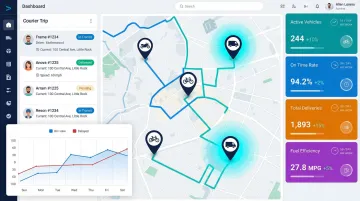
NextBillion.ai is a location intelligence platform built by veterans of Grab's geo team, offering a suite of real-time GPS tracking and routing APIs purpose-built for logistics and last-mile delivery operations. Unlike carrier-event APIs, NextBillion.ai provides live vehicle and courier location data — enabling e-commerce businesses to show customers a true, moving pin on a map rather than a static carrier scan event.
For e-commerce teams, the practical edge lies in its fixed-fee pricing model — avoiding the per-call billing spikes common with other mapping providers — combined with real-time location APIs and AI-powered route optimization. It integrates with fleet management systems (Samsara, Geotab, Motive) and supports on-premise deployment, making it well-suited for brands running their own delivery fleets or working with regional last-mile carriers.
Customers including DoorDash, Zepto, Meesho, and Gojek use NextBillion.ai to power high-frequency location queries at scale.
| Attribute | Details |
|---|---|
| Key Features | Real-time GPS/location tracking API, route optimization, live ETA calculations, sub-second response times, fleet telematics integration, on-premise deployment option |
| Carrier/Integration Coverage | Designed for owned/contracted fleet operations and last-mile delivery; integrates with Samsara, Geotab, Motive, Netradyne; global mapping coverage |
| Pricing Model | Fixed-fee monthly pricing (per-vehicle or per-order, not per-API-call); contact NextBillion.ai for current plans |
Parcel Perform
Parcel Perform is an enterprise-grade delivery intelligence API platform used by large-scale global e-commerce businesses and logistics providers. It aggregates tracking data from 1,100+ carriers worldwide and applies AI models to generate predictive delivery dates, exception detection, and supply chain performance analytics via API.
Parcel Perform's key differentiator is its focus on data quality and predictive intelligence at scale — it goes beyond raw event forwarding to provide enriched, normalized tracking data with machine-learning-derived ETDs. For enterprise e-commerce teams that need carrier SLA monitoring, delivery failure prediction, and analytics APIs alongside tracking, it provides a more comprehensive data layer than event-only APIs.
| Attribute | Details |
|---|---|
| Key Features | 1,100+ carrier integrations, AI predictive delivery dates, exception detection, SLA monitoring, analytics API |
| Carrier/Integration Coverage | Global; strong coverage across Asia-Pacific, Europe, and US; suited for cross-border e-commerce |
| Pricing Model | Custom enterprise pricing — contact Parcel Perform directly for commercial terms |
How We Chose the Best Shipment Tracking APIs
These APIs were assessed on technical merit, not marketing presence. A common mistake e-commerce teams make is selecting a tracking API based solely on carrier count or brand name — without testing webhook reliability, data latency, or schema compatibility.
The right API fits the team's technical environment and operational requirements.
Core Evaluation Factors
Carrier coverage depth and normalization quality — Incomplete or inconsistent event data means customer-facing tracking pages show stale or incorrect statuses, driving WISMO tickets. APIs that normalize carrier events into a unified schema eliminate the burden of building custom parsers for each carrier's proprietary codes.
Webhook reliability and delivery latency — Industry benchmarks put p95 webhook response times at 622 milliseconds. APIs that exceed this threshold introduce lag customers will notice.
Pricing model transparency — Per-API-call pricing creates unpredictable costs at scale, especially during peak seasons. Webhooks optimize billing by pushing data only when changes occur, whereas polling increases consumption regardless of data changes. Per-shipment or fixed-fee models protect margins.
Developer experience — Well-documented APIs with sandbox environments and responsive support reduce integration time and maintenance burden. 58% of developers rely on internal documentation, but 39% cite inconsistent docs as their biggest roadblock.
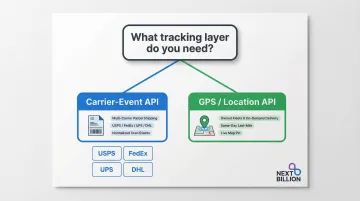
Fit for tracking layer needed — Carrier-event APIs and GPS/location APIs serve fundamentally different use cases. Teams building last-mile visibility for on-demand or same-day delivery need GPS-based location intelligence — carrier scan events don't provide continuous position data, and that gap shows up directly in the customer experience. Teams running white-labeled last-mile networks have the same requirement.
Conclusion
The "best" shipment tracking API isn't a universal answer — it depends on whether a business needs carrier-event normalization across a broad carrier network, or real-time GPS location intelligence for last-mile fleet visibility, or both. The wrong choice results in brittle integrations, hidden cost escalations, and tracking experiences that frustrate customers instead of building loyalty.
Evaluate tracking APIs using a sandbox before committing, pressure-test webhook reliability under load, and calculate total cost of ownership at your expected shipment volume — not just the starting tier price.
If your stack includes owned or partnered delivery fleets, NextBillion.ai's route optimization and tracking APIs are worth evaluating — built for logistics at scale, with per-vehicle pricing that won't spike as shipment volume grows.
Frequently Asked Questions
Which technology is commonly used for real-time tracking of shipments?
E-commerce shipment tracking relies on two main technology layers: carrier scan event APIs, which poll or receive webhook callbacks from networks like FedEx, UPS, USPS, and DHL, and GPS/telematics-based APIs, which stream real-time vehicle coordinates for last-mile delivery. Most businesses use carrier-event APIs for long-haul tracking and GPS APIs for the final delivery leg.
What is a shipment tracking API and how does it work?
A shipment tracking API lets applications query or subscribe to shipment status data from carrier networks or GPS systems. It operates through polling (your app requests updates on demand) or webhooks (the API pushes notifications when status changes occur), so e-commerce platforms can display current delivery information without manual carrier lookups.
How do I integrate a real-time tracking API into my e-commerce store?
Start by obtaining API credentials, then submit tracking numbers via REST API after each order ships and configure webhooks to receive status events. Map the returned data fields to your order management or customer-facing UI. Most providers offer sandbox environments and SDKs to speed up the process.
What is the difference between carrier-event tracking and GPS-based tracking APIs?
Carrier-event APIs aggregate scan updates from carrier networks — "picked up," "in transit," "out for delivery" — and normalize them into a unified schema. GPS-based APIs stream live coordinates from a vehicle or courier device for continuous map tracking. Use carrier-event APIs for third-party parcel shipping; GPS APIs for owned fleets or on-demand last-mile delivery.
How much does a shipment tracking API cost?
Common models include per-call pricing, per-shipment-per-month fees, and fixed-fee enterprise subscriptions. Calculate cost at your actual shipment volume rather than starting tier prices — per-call pricing in particular can escalate sharply during peak seasons.
Can a single tracking API support multiple carriers?
Yes. Multi-carrier tracking APIs are specifically designed for this purpose — platforms like AfterShip (1,300+ carriers), Parcel Perform (1,100+ carriers), and EasyPost (100+ carriers) normalize event data from dozens to hundreds of global and regional carriers into a single unified API response. This removes the need to build and maintain individual integrations for each carrier a business works with.